When purchasing a handheld fiber laser welding machine, many buyers focus on laser power, welding speed, and price. However, one critical factor is often overlooked:
Should you choose an air-cooled or water-cooled laser welding system?
The cooling method directly affects welding stability, machine lifespan, maintenance requirements, and overall production efficiency.
The right choice depends on your operating conditions, production volume, welding materials, and target applications.
This guide will help you make a practical decision before investing in a handheld laser welding solution.
Why Does Cooling System Matter in Laser Welding?
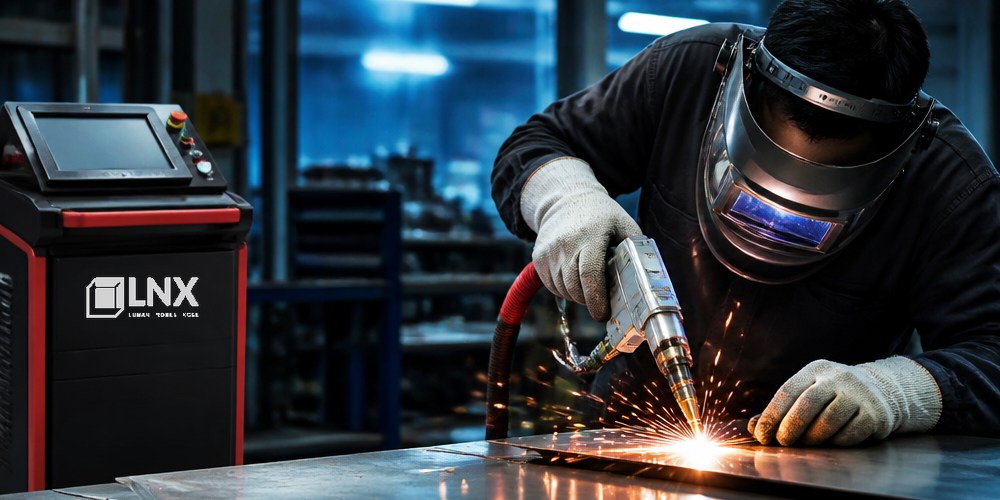
A handheld fiber laser welding machine converts electrical energy into high-density laser energy. During continuous operation, part of this energy becomes heat.
If the heat is not controlled properly, it can affect:
- Laser source stability
- Welding consistency
- Beam quality
- Machine lifetime
- Long-term operating cost
A suitable cooling system keeps the laser source working within an optimal temperature range, ensuring stable welding performance even during demanding production tasks.
Air-Cooled vs Water-Cooled Handheld Laser Welders: What Is the Difference?
Air-Cooled Laser Welding System
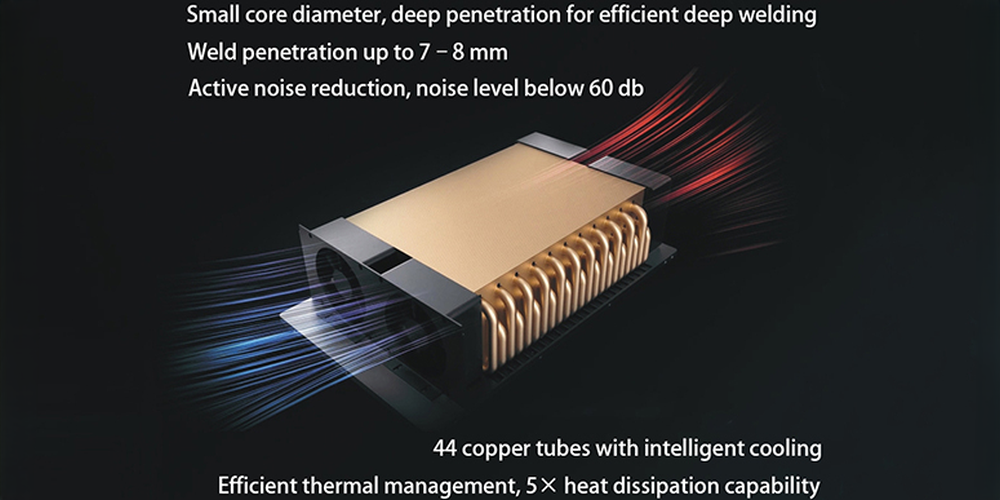
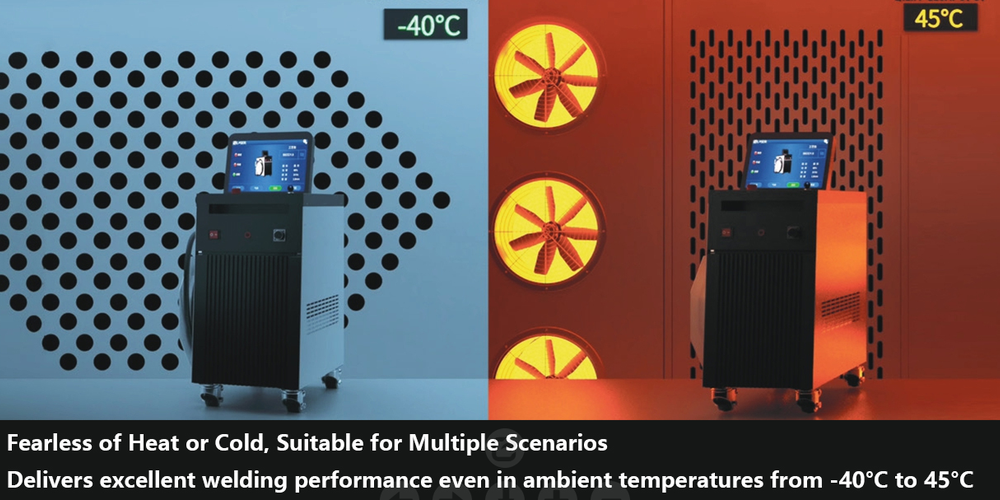
An air-cooled system uses high-efficiency fans and heat dissipation structures to remove heat from the laser source.
Advantages:
- Compact machine design
- Lower maintenance requirements
- Easier installation
- No external water chiller required
- Better mobility for workshop applications
Air cooling is ideal for companies that need flexibility and do not operate the machine continuously at maximum power.
Typical Applications:
- Stainless steel fabrication
- Metal cabinets
- Kitchen equipment
- Decorative metal products
- Small batch manufacturing
- Repair and maintenance work
For example:
A small fabrication workshop producing stainless steel frames may only weld several hours per day with intermittent operation. In this case, an air-cooled handheld laser welder can provide sufficient performance with lower operating complexity.
Water-Cooled Laser Welding System
A water-cooled system uses a dedicated industrial chiller to circulate cooling water and maintain a stable temperature.
Compared with air cooling, water cooling provides stronger heat management, especially during long periods of continuous welding.
Advantages:
- Higher thermal stability
- Suitable for continuous production
- Better performance under high-power operation
- More consistent welding quality
- Longer service life for key components
Typical Applications:
- Automotive parts manufacturing
- Heavy equipment fabrication
- Large metal structures
- Industrial machinery production
- High-volume sheet metal processing
For manufacturers running multiple shifts or handling thick metal materials, water cooling provides better reliability for demanding production environments.
How to Choose the Right Cooling System Based on Your Working Conditions?
1. Consider Your Daily Operating Hours
Your production schedule is one of the most important factors.
Air Cooling Recommended:
- Less than 4–6 welding hours per day
- Intermittent welding jobs
- Small and medium workshops
Water Cooling Recommended:
- More than 6–8 working hours per day
- Continuous welding operation
- Mass production environment
A machine used occasionally has completely different cooling requirements from a machine running continuously on a factory floor.
2. Consider the Material You Weld
Different metals have different thermal characteristics.
Stainless Steel
Common applications:
- Food equipment
- Metal furniture
- Decorative products
Both air-cooled and water-cooled systems can work effectively.
Carbon Steel
Common applications:
- Structural frames
- Industrial equipment
- Machinery parts
For thicker carbon steel or long welding cycles, water cooling provides better stability.
Aluminum and Copper
These materials require more precise heat control because:
- Aluminum has high thermal conductivity
- Copper has high reflectivity to laser energy
For these applications, water-cooled systems are usually the preferred choice.
3. Consider Welding Thickness and Production Requirements
A simple selection guideline:
| Welding Requirement | Recommended Cooling |
|---|
| Thin sheet metal (<3mm) | Air Cooling |
| Medium thickness metal | Both options |
| Thick metal welding | Water Cooling |
| Continuous production | Water Cooling |
| Flexible workshop operation | Air Cooling |
The key question is not only:
"How powerful is the laser?"
The better question is:
"How long and how intensively will the machine operate every day?"
4. Consider Your Factory Environment
Air Cooling Is Suitable For:
- Small workshops
- Limited installation space
- Mobile repair operations
- Customers who prefer simple maintenance
The machine can be moved easily and requires fewer supporting components.
Water Cooling Is Suitable For:
- Industrial factories
- Dedicated production lines
- High-temperature working environments
- Companies requiring maximum uptime
The additional cooling system provides better temperature control during heavy workloads.
Air Cooling vs Water Cooling: Quick Comparison
| Feature | Air Cooling | Water Cooling |
|---|
| Installation | Simple | Requires chiller connection |
| Maintenance | Lower | Regular water system maintenance |
| Mobility | Excellent | Moderate |
| Heat control | Good | Excellent |
| Continuous operation | Medium | High |
| Best for | Workshops | Industrial production |
| Recommended power range | 1000W–1500W | 1500W–3000W |
Questions to Ask Before Purchasing a Handheld Laser Welder
Before selecting a machine, professional buyers should evaluate:
1. What materials do you mainly weld?
Stainless steel, carbon steel, aluminum, or copper?
2. How many hours will the machine run every day?
Occasional use and industrial production require different cooling solutions.
3. What is your average welding thickness?
Thicker materials usually require more stable thermal management.
4. Is your priority mobility or maximum production capacity?
- Flexible workshop → Air cooling
- Factory production → Water cooling
Final Recommendation
There is no universal "better" cooling system.
The best choice depends on your real working conditions.
Choose an air-cooled handheld fiber laser welding machine if you need:
- Easy operation
- Lower maintenance
- Workshop flexibility
- Occasional or medium-duty welding
Choose a water-cooled handheld fiber laser welding machine if you need:
- Long continuous operation
- Stable output power
- Higher production efficiency
- Industrial-grade performance
Choosing the correct cooling system from the beginning can help reduce downtime, improve welding quality, and maximize your return on investment.
Need Help Choosing the Right Laser Welding Solution?
Every factory has different welding requirements.
Share your:
- Material type
- Welding thickness
- Daily working hours
- Production volume
Our engineers can help recommend the right handheld fiber laser welding configuration for your application.
Contact us today to find the most suitable laser welding solution for your business.
View the LNX Series of Handheld Laser Welding Machines