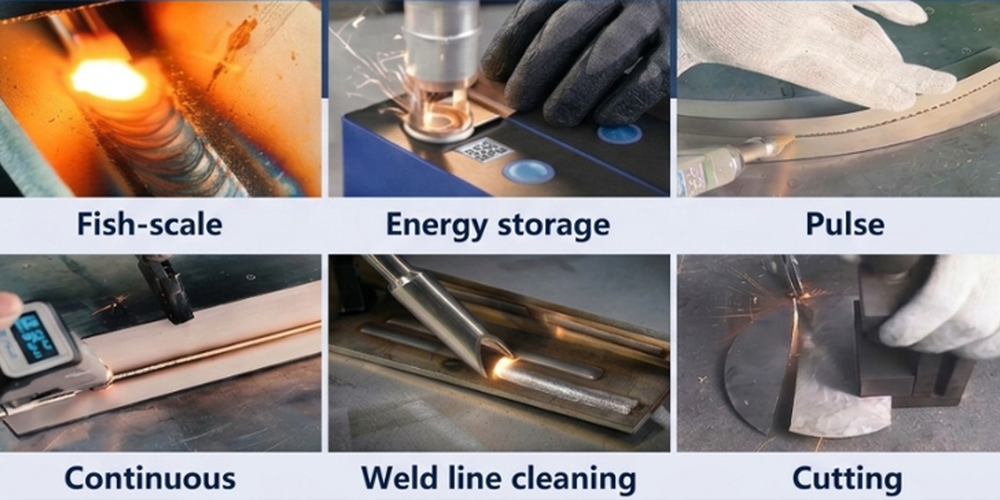
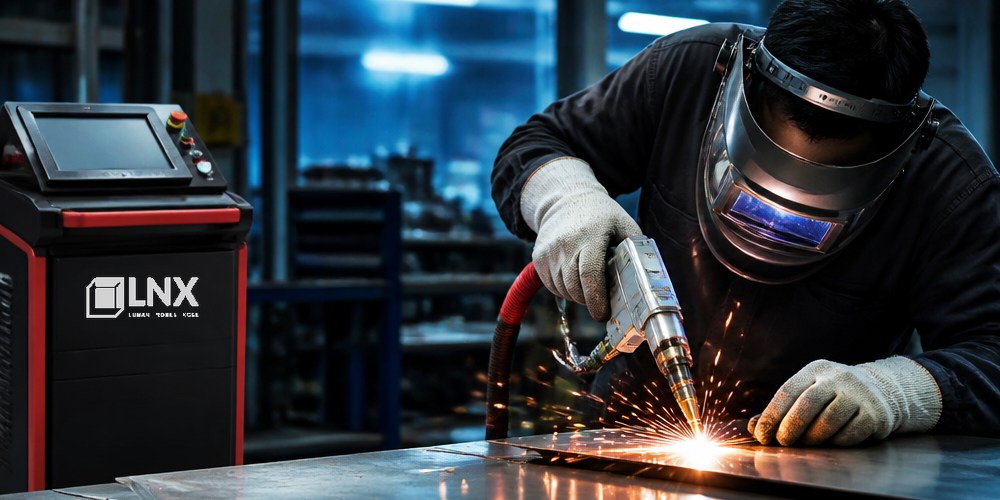
In the metal processing industry, traditional TIG and MIG/MAG welding have long faced common pain points such as a significant shortage of certified welders, susceptibility to distortion and burn-through when welding thin sheets, tedious post-weld finishing, and the inability to process large workpieces on fixed machinery. With the civilian adoption of fiber laser technology, handheld fiber laser welding machines have become the preferred choice for capacity upgrading in many sheet metal, hardware, and engineering companies, thanks to their flexibility, efficiency, ease of use, and aesthetically pleasing welds.
When selecting equipment, most companies are most concerned with: "Is my production scenario truly suitable for handheld laser welding?" This article comprehensively analyzes the core applicable working conditions, industry cases, power matching solutions, and objective application boundaries of handheld fiber laser welding machines based on actual industrial processing needs, helping you quickly determine equipment suitability.
I. 6 Core Applicable Working Conditions for Handheld Fiber Laser Welding Machines
1. Precision Welding of Thin Metal Sheets
This is the most advantageous core application for handheld laser welding. For thin metal sheets with a thickness of 0.4–4mm, traditional welding is highly prone to burn-through, warping, and blackened welds, resulting in high subsequent grinding and straightening costs.
Scenario Description: Workpieces have thin walls and high requirements for finished flatness and appearance, with no allowance for obvious deformation, weld spatter, or burn-through defects. Some workpieces are delivered directly as finished products after welding, with no secondary grinding process.
Applicable Materials: Stainless steel, galvanized steel, cold-rolled steel, aluminum alloy sheets, thin copper sheets, titanium alloy sheets.
Core Value: Laser energy is highly concentrated, with heat input only 1/5 to 1/10 that of traditional TIG welding, and a very narrow heat-affected zone. Post-weld workpieces show no obvious deformation, no weld spatter, and almost no splashing. In most cases, no subsequent grinding or polishing is required, allowing parts to proceed directly to the next process step, significantly shortening production cycles.
Typical Industries: Stainless steel kitchenware and tableware, sheet metal enclosures and cabinets, home appliance shells, electronic component housings, hardware decorative parts, new energy battery shells.
2. Welding of Complex Shapes / Non-Standard Workpieces
Non-standard workpieces with irregular shapes and complex weld paths are difficult to process with automated welding stations, representing an efficiency bottleneck for traditional welding.
Scenario Description: Workpieces have irregular shapes requiring switching between various weld types (internal/external corners, lap joints, butt joints, seam sealing, etc.), with weld positions that are not fixed, making batch clamping and fixturing impossible.
Applicable Materials: Various metal profiles, round and square tubes, irregular sheet metal parts, stamped parts.
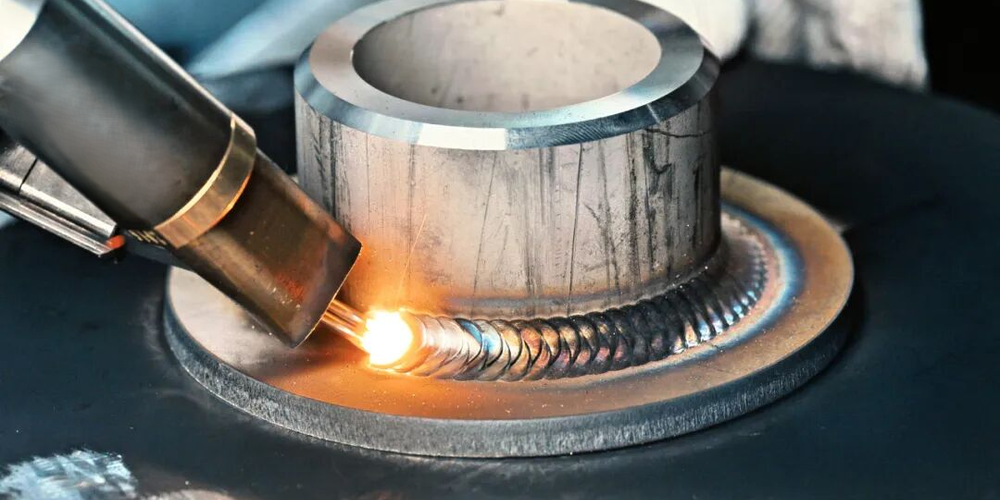
Core Value: The handheld welding gun offers high flexibility, enabling welding at any angle and position. It supports various weld forms such as flat welding, fillet welding, internal/external right-angle welding, and lap welding, without requiring complex fixtures. It perfectly adapts to complex, irregular, and customized processes.
Typical Industries: Kitchen and bathroom cabinet products, stair railings and handrails, stainless steel doors and windows, advertising sign letters, non-standard equipment frames, shelves and display cabinets, hardware furniture.
3. On-Site / Outdoor Mobile Operation
Scenarios involving large workpieces that cannot be moved, outdoor installation projects, and after-sales repair welding have non-fixed workstations that cannot be covered by traditional fixed welding equipment.
Scenario Description: Workpieces are large and heavy, making them difficult to move to a welding station, or projects are located at outdoor construction sites, requiring equipment to move with the operation position to complete on-site splicing, repair welding, and maintenance.
Applicable Materials: Steel structural parts, industrial pipes, on-site sheet splicing, equipment frame repair welding.
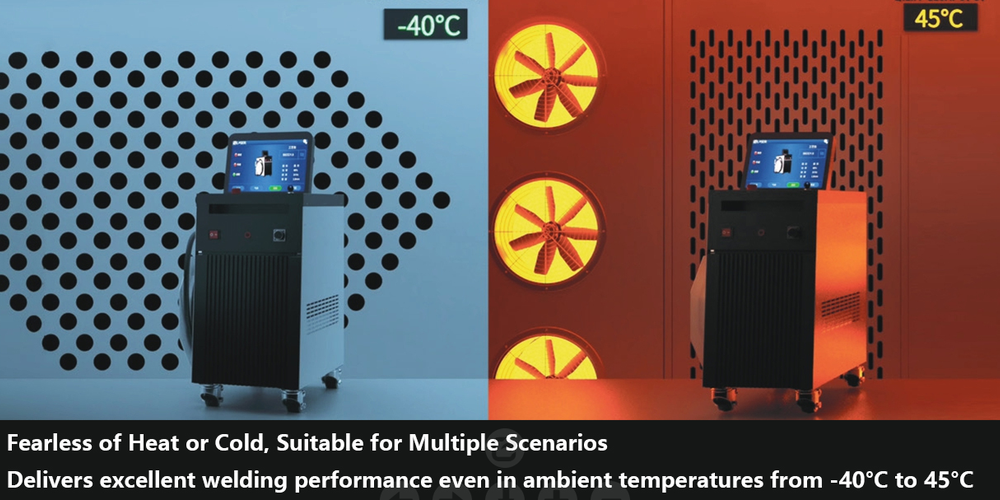
Core Value: The entire machine is equipped with universal casters for easy movement and features a standard 5–10 meter long fiber optic cable, providing a wide operating radius. No fixed dedicated workstation is required, allowing direct on-site operation at the workpiece location without limitations from site or workpiece size.
Typical Industries: Steel structure engineering, elevator installation and maintenance, on-site assembly of large cabinets, after-sales maintenance of hardware products, outdoor advertising sign installation, on-site pipeline welding.
4. Small-Batch, High-Mix Flexible Production
Small and medium-sized processing factories dealing with miscellaneous custom orders, small batch quantities, and frequent changeovers face challenges in recruiting senior welders and managing high labor costs.
Scenario Description: Production is primarily based on customized orders, requiring switching between multiple workpiece types and welding processes daily. Automated production lines are not feasible, and reliance on manual welding is high, but professional welders command high salaries and have high turnover.
Applicable Materials: Various common ferrous and non-ferrous metals.
Core Value: The operation threshold is extremely low. Ordinary workers can become proficient after 1–2 days of training. Process parameters can be adjusted with a single touch on the screen, allowing for fast parameter changes during changeovers. There is no dependence on certified senior welders, significantly reducing labor costs and management difficulty.
Typical Industries: Small and medium-sized hardware processing plants, custom sheet metal shops, prototype sample making, research and teaching laboratories, repair and processing shops.
5. Welding of Finished Parts with High Appearance Requirements
Workpieces that are finished products directly facing end customers require high weld aesthetics. Post-weld grinding and polishing with traditional welding are time-consuming and labor-intensive.
Scenario Description: Workpieces are finished products where appearance surfaces are critical. Welds must be smooth, flat, with no obvious welding scars, discoloration (blackening/yellowing), and require little to no subsequent finishing.
Applicable Materials: Finished stainless steel products, aluminum alloy decorative parts, metal furniture, bathroom hardware.
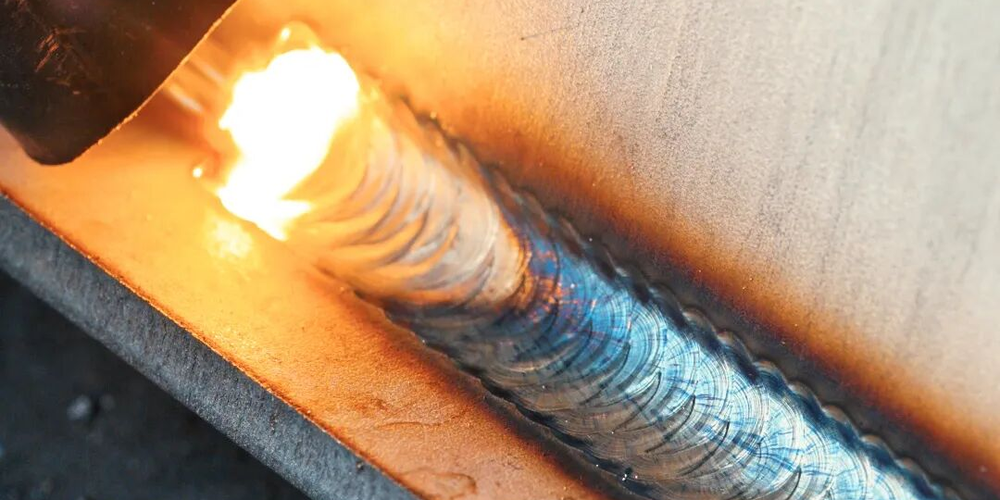
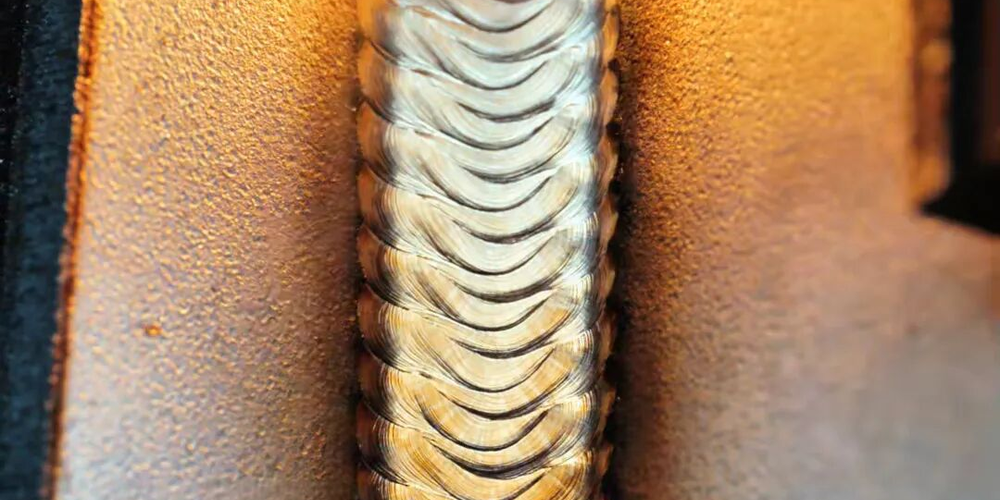
Core Value: Using an oscillating weld head, the weld seam is uniform and delicate. The welding process produces almost no spatter, and the weld bead has a silvery-white, aesthetically pleasing appearance. This greatly reduces or even eliminates subsequent grinding and polishing processes, saving on labor and consumable costs.
Typical Industries: Stainless steel home goods, commercial kitchen equipment, metal furniture, display props, bathroom hardware, hotel decoration projects.
6. Special Welding of Precision Components
High-precision welding of precision parts, valuable materials, and heat-sensitive components requires extremely high standards for weld precision and thermal damage control.
Scenario Description: Workpieces are small and made of valuable materials, requiring welds that are pore-free, non-contaminating, and without damage to adjacent heat-sensitive components and precision structures. The large heat-affected zone of traditional welding often leads to workpiece scrap.
Applicable Materials: Precious metals (gold, silver, platinum), titanium alloys, medical-grade stainless steel, precision instrument parts.
Core Value: Laser energy is precisely controllable, with a spot diameter that can be as small as millimeter scale, allowing welding adjacent to heat-sensitive elements. Welds are dense and pore-free with good sealing properties, and the base material's performance is well-preserved, resulting in a low scrap rate.
Typical Industries: Medical device accessories, jewelry repair, instrument manufacturing, precision small parts for aerospace, sensor welding.
II. Objective Boundaries: Scenarios Not Recommended for Handheld Laser Welding Machines
Handheld fiber laser welding machines are not a universal solution. To avoid selection errors, the following scenarios are better suited for other welding processes:
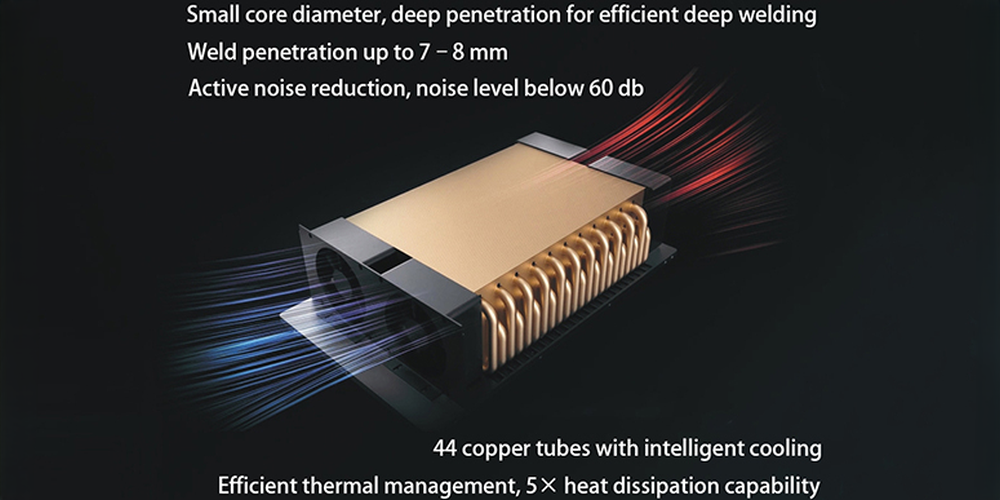
Heavy Plate Welding > 8mm Thickness: Penetration depth is limited for thick plates with handheld laser welding. Efficiency is lower than traditional submerged arc welding or gas metal arc welding, and requires multi-layer, multi-pass welding, making the overall cost advantage less clear.
Non-Metal Material Welding: Fiber lasers are primarily for metals; plastics, ceramics, glass, and other non-metals cannot be welded directly.
Ultra-High Volume Standardized Production Lines: For standard workpieces with uniform specifications and extremely high output, fully automatic laser welding stations or welding robots offer far higher production efficiency than manual handheld welding.
High-Requirement Pressure-Bearing Welds: For applications like high-pressure vessels or pressure pipes with extremely high strength requirements for welds, a welding procedure qualification must be conducted beforehand to confirm the mechanical properties of the weld meet standards before selection.
III. Power Selection Reference Table by Working Condition
Note: For highly reflective materials like aluminum alloys and copper, it is recommended to select a power level higher than the standard recommendation.
IV. Frequently Asked Questions (FAQ)
Q1: Can a handheld laser welding machine weld aluminum alloys and galvanized steel?
A: Yes. Aluminum alloys are highly reflective; it is recommended to use 1500W or higher power with an oscillating weld head to effectively improve weld stability. When welding galvanized steel, the low heat input of laser welding minimizes zinc vaporization effects compared to TIG welding; high-quality welds can be achieved with appropriate process parameters.
Q2: Is a welder's certificate required to operate a handheld laser welder?
A: The operation threshold is low, and ordinary workers can be trained to operate it. However, according to safety regulations, welding operations falling under the category of special operations still require certified personnel as per local regulatory requirements. Operators must also receive equipment safety operation training.
Q3: Can a wire feeder be added?
A: Yes, automatic wire feeders are supported, compatible with 0.8–1.6mm diameter wire. This is mainly used to fill gaps in workpieces, enhance weld reinforcement and strength. It is recommended for use with 1500W and higher power models.
Q4: What is the overall cost reduction compared to traditional TIG welding?
A: Labor costs can be reduced by approximately 50% (no need for highly paid senior welders). Subsequent finishing costs can be reduced by 60%–80%, and welding efficiency can be increased by 2–5 times. For thin sheet processing scenarios, the equipment cost is typically recovered within six months to a year.
V. Summary: How to Quickly Determine if Your Scenario is Suitable?
If your production scenario meets any 2–3 of the following characteristics, a handheld fiber laser welding machine is a cost-effective upgrade choice:
Primary welding involves thin sheets (1–6mm) with requirements for minimal distortion and good appearance.
Workpieces are often non-standard or irregularly shaped, making automated batch welding difficult.
There is a need for on-site operation or mobile maintenance.
Difficulty in recruiting welders and high labor costs are pressing issues, with a desire to reduce dependence on skilled workers.
There is a goal to reduce post-weld finishing processes and improve overall production efficiency.
For a complete parameter sheet for specific power models, or to obtain a welding process solution tailored to your specific workpieces, please contact us for a free sample welding test service to verify equipment suitability with real welding results.
View the LNX Series of Handheld Laser Welding Machines